

Selenium Nanoparticles Selectively Target KRAS G13D to Inhibit Colorectal Cancer
Selenium Nanoparticles Selectively Target KRAS G13D to Inhibit Colorectal Cancer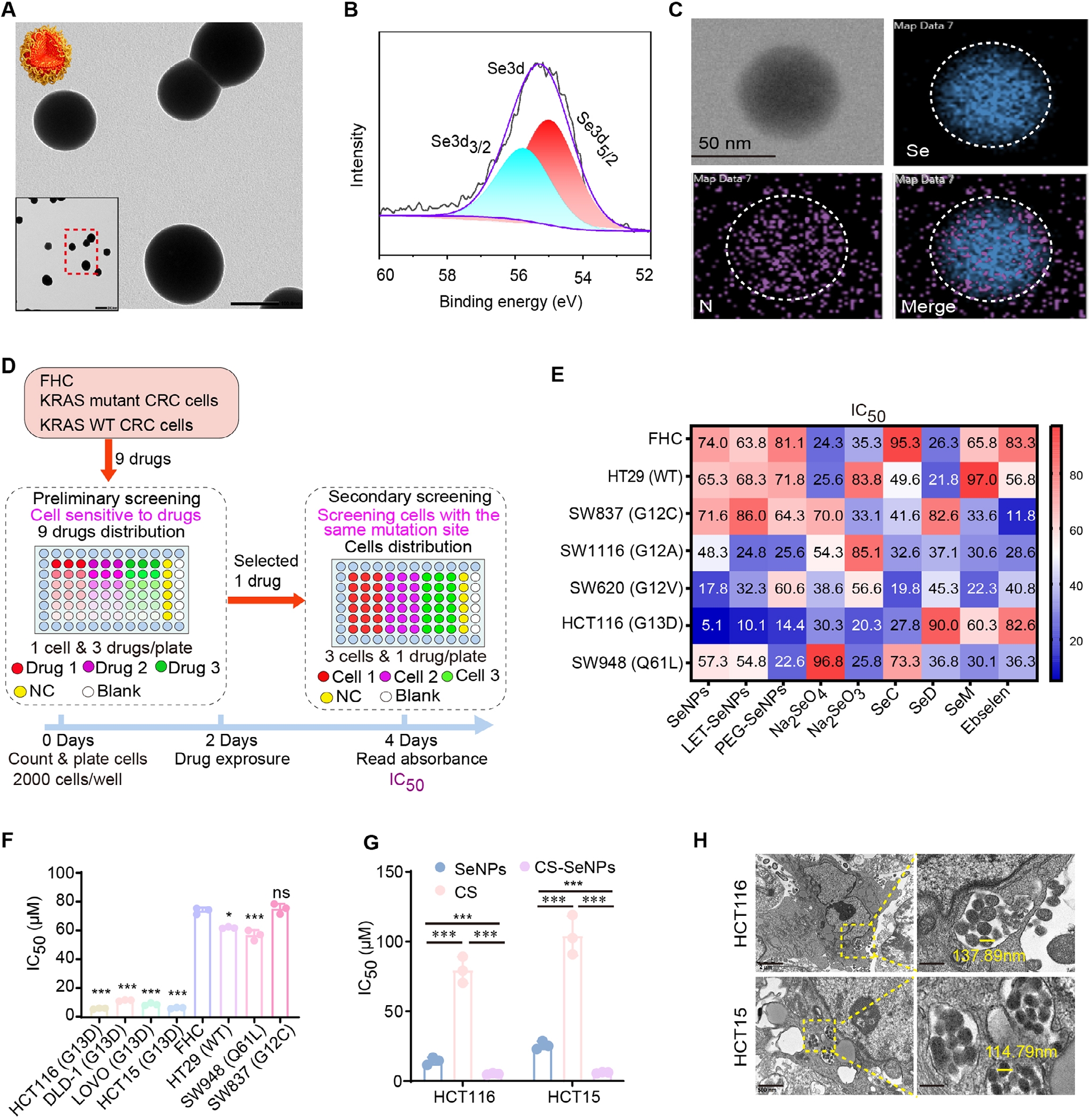
🌏 Research Overview
KRAS G13D‑mutant colorectal cancer is prone to liver metastasis and lacks mutation‑specific targeted therapeutics. Clinical cohort analysis identifies down‑regulated selenoprotein GPX2 in this subtype, which correlates with poor prognosis. This work constructs selenium nanoparticles (SeNPs) to selectively combat KRAS G13D tumors via dual mechanisms. It suppresses tumor growth and liver metastasis across multiple animal models, offering a new nanotherapeutic strategy for refractory colorectal cancer.
✨ Core Innovations
- Research initiated from clinical sample characteristics.
- SeNPs exert two independent pathways: regulating selenoprotein and directly binding mutant KRAS to achieve mutation selectivity.
- Multi‑layer in‑vivo validation including CDX, orthotopic liver‑metastasis and PDX models.
- Uncovers concentration‑dependent bidirectional biological effects of selenium nanoparticles for dosing guidance.
🔬 Key Materials & Mechanism Validation
SeNPs are synthesized and fully physicochemically characterized. In‑vitro results show low‑dose SeNPs up‑regulate ΔNp63/GPX2 to block pro‑angiogenic pathways. Metabolite selenite binds the P‑loop of KRAS G13D and suppresses downstream oncogenic signaling. High‑dose SeNPs trigger tumor apoptosis via ROS accumulation. In‑vivo assays confirm anti‑tumor, anti‑metastasis efficacy with favorable biosafety.
💡 Insights & Outlook
Different from conventional drug‑loaded nanocarriers, SeNPs serve as the intrinsically active agent. Its bidirectional dose effect demands strict control of therapeutic windows. Future directions include targeted modification and oral formulation development. Limitations involve single‑center clinical samples and insufficient long‑term evaluation of gut microecology.
📄 Article Information
Journal: Advanced Science, 2026
Title: Selenium Nanoparticles Selectively Target KRAS G13D to Inhibit Colorectal Cancer
18915694570
Previous: Nano‑Material Cu
Next: the end...